
Concrete vs Pavers for Your Los Angeles Patio: Which Is the Better Choice?
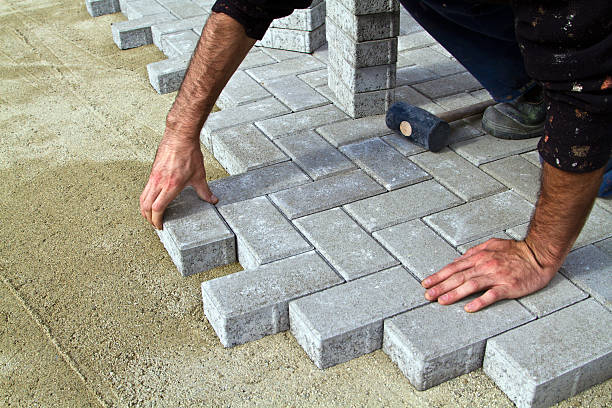
One of the most common decisions Los Angeles homeowners face when planning a patio is the choice between concrete and pavers. Both create durable outdoor surfaces. Both are widely installed across the city. Both look good when properly designed and installed. But they are meaningfully different in cost, long-term performance, maintenance requirements, and what they look like over time — and the right choice depends on your specific priorities, your property, and your budget.
This guide gives a complete, honest comparison of concrete versus pavers for Los Angeles patios so you can make the decision that is genuinely right for your home.
The Core Difference: What You Are Choosing Between
Poured concrete is a single, monolithic slab created by pouring wet concrete into formed shapes and finishing the surface to the desired texture. Once cured, it is one continuous surface with no joints except for the expansion cuts that manage seasonal movement.
Pavers are individual precast concrete, natural stone, or clay brick units laid in a pattern over a prepared base. The finished surface is made up of many individual pieces with joint material between them rather than one continuous slab.
Both approaches create usable, durable patio surfaces. But the way they are built, the way they behave over time, and the way they look and feel are genuinely different.
Cost Comparison
ConcreteStandard broom-finished concrete patio installation in Los Angeles typically costs between $12 and $20 per square foot installed. Decorative finishes — stamped, colored, or exposed aggregate — run $18 to $35 per square foot. For a 500 square foot patio, standard concrete typically costs $6,000 to $10,000. Decorative concrete runs $9,000 to $17,500 for the same area.
PaversConcrete paver installation in Los Angeles typically costs between $18 and $35 per square foot installed, including base preparation and jointing material. Natural stone pavers run higher — $30 to $60 per square foot or more depending on stone type. For a 500 square foot patio, concrete pavers typically cost $9,000 to $17,500. Natural stone patios commonly run $15,000 to $30,000 or more.
Verdict: Concrete is generally less expensive than pavers for comparable installation quality. The cost advantage of concrete is most significant when comparing standard finishes. Decorative concrete and entry-level pavers overlap in the mid-range of the cost spectrum.
Appearance
ConcreteStandard concrete has a clean, functional appearance that suits modern, minimalist, and contemporary Los Angeles homes extremely well. Decorative finishes dramatically expand the visual options — stamped concrete can convincingly mimic stone, brick, and tile at a fraction of the cost. Colored concrete adds warmth and character. Over time, concrete surfaces may develop light surface staining or a slight silver patina that many homeowners find attractive.
PaversPavers offer the most visually rich and design-flexible outdoor surface option. The variation in color, texture, and pattern available in paver products is virtually unlimited, and the visual depth of individual units laid in pattern creates a quality that poured concrete cannot exactly replicate. Natural stone pavers deliver unmatched natural beauty and character. Over time, well-maintained pavers tend to age gracefully — the small variations between individual units become more pronounced and often more attractive as the surface matures.
Verdict: For pure visual richness and design flexibility, pavers have an edge over standard and decorative concrete. For modern, minimalist aesthetics and clean geometry, concrete is often the better design choice.
Durability and Long-Term Performance
ConcreteA properly poured and reinforced concrete patio in Los Angeles is extremely durable — it can last 30 to 50 years or more with appropriate maintenance. The main vulnerabilities are cracking from ground movement, tree root intrusion, or structural settling. When concrete cracks, the crack is visible across the full slab surface and is difficult to repair invisibly. Concrete repairs are typically functional but rarely invisible unless the entire slab is replaced.
PaversIndividual pavers are extremely durable units — the paver material itself is unlikely to crack under normal use. The vulnerability of a paver patio is in the installation — if the base settles unevenly or edge restraints fail, individual pavers can shift, sink, or become misaligned over time. This creates trip hazards and an increasingly uneven surface. The advantage is repairability: a paver patio with a settling problem can be partially lifted, the base re-leveled, and the pavers re-laid with an invisible repair. A well-maintained paver patio can last indefinitely.
Verdict: Both are durable when properly installed. Concrete is more forgiving of moderate base imperfections but less repairable when problems occur. Pavers are more demanding of precise base preparation but far more repairable when individual issues arise.
Maintenance
ConcreteStandard concrete requires minimal maintenance — occasional cleaning and periodic inspection for crack development. Decorative concrete finishes benefit from resealing every few years to maintain appearance and protect the finish. Concrete staining from outdoor use — oil, rust from furniture, organic matter — can be difficult to remove completely from unsealed surfaces.
PaversPaver maintenance involves periodic weed management in the joints — a reality in Los Angeles where the mild climate supports year-round weed germination. Polymeric joint sand, applied at installation and occasionally refreshed, significantly reduces weed intrusion. Pavers may also require occasional re-leveling in areas that settle over time. Individual stained or damaged pavers can be removed and replaced easily.
Verdict: Standard concrete requires less ongoing maintenance than pavers. Decorative concrete requires periodic resealing. Paver maintenance — primarily joint weeding and occasional re-leveling — is more ongoing but each task is straightforward.
Heat Performance in Los Angeles
Both concrete and pavers absorb heat in the Los Angeles sun and can become warm to barefoot contact during summer afternoons. Lighter colored concrete and lighter paver options absorb less heat than dark-toned alternatives. Concrete surfaces under a patio cover stay significantly cooler than those in full sun. The difference in heat performance between concrete and pavers is modest — both behave similarly under equivalent sun exposure.
Which Is Right for Your Los Angeles Patio?
Choose concrete if your primary priorities are cost-effectiveness, clean modern aesthetics, a seamless monolithic surface, and minimal ongoing maintenance. Concrete is the dominant choice for Los Angeles patios for good reasons — it delivers excellent value, looks great in contemporary and minimalist designs, and lasts for decades with minimal attention.
Choose pavers if your primary priorities are visual richness, design flexibility, natural stone character, or the long-term repairability of a modular surface. Pavers are the right choice for homeowners who want the visual character and tactile quality of an individually laid surface and are willing to invest more upfront and commit to basic ongoing maintenance.
Both are excellent choices when properly installed. The wrong answer is cheap installation of either material — a poorly poured concrete slab and a poorly installed paver patio are both problematic. The quality of the installation matters as much as the material selected.
Stonewood Landscape Installs Both Concrete and Pavers Across Los Angeles
Stonewood Landscape designs and builds concrete patios and paver installations for homeowners throughout Los Angeles, including Culver City, Santa Monica, Beverly Hills, Encino, and Pacific Palisades. As a family-owned landscape design and construction company with over 10 years of experience and more than 500 completed projects, Stonewood helps every homeowner choose the right surface for their specific property and build it with the quality and craftsmanship that makes it last.

Concrete or pavers — the right choice depends on your priorities. Stonewood Landscape helps you decide and builds it beautifully either way.
Visit stonewoodlandscapeinc.com to request your free estimate and start your Los Angeles patio project today.


